Carlo Krause · 28 October 2026
How Simulation Platforms Are Quietly Reshaping Cross-Disciplinary Training in Central European Vocational Schools
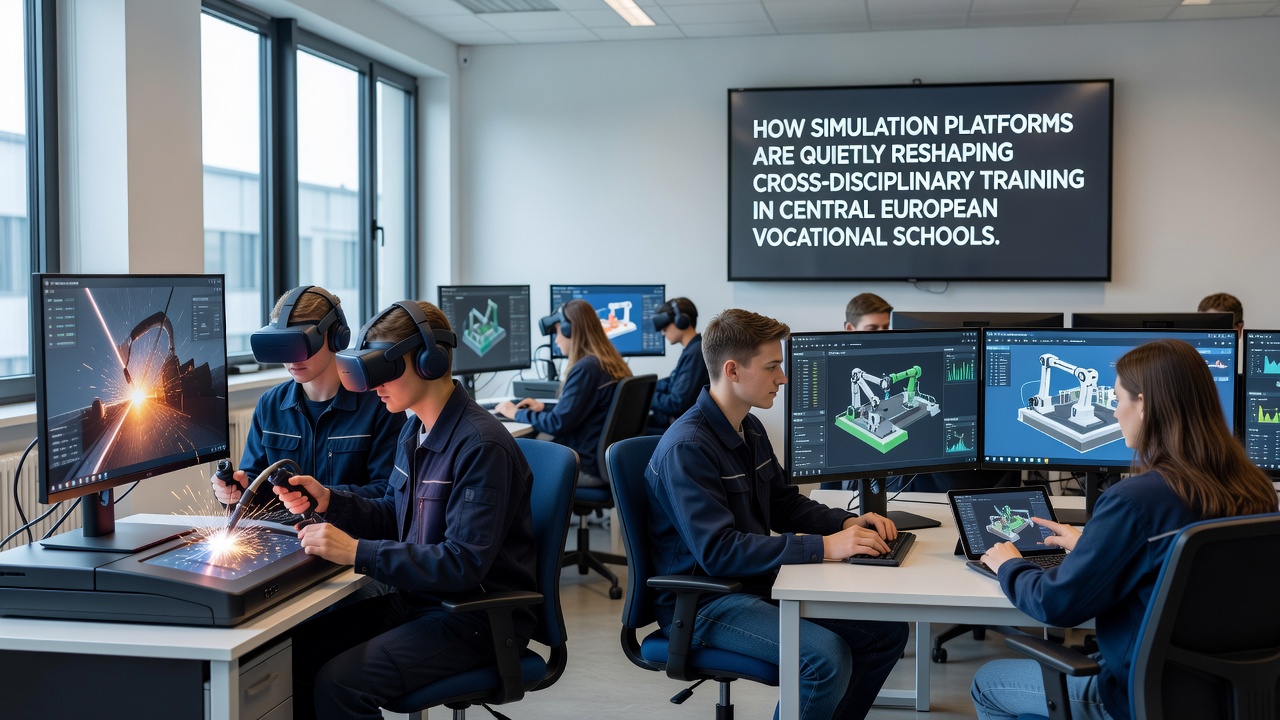
Vocational schools across Central Europe have integrated simulation platforms into their curricula at an accelerating pace since the early 2020s, and the trend shows no signs of slowing through October 2026. These digital environments allow students in fields such as mechanical engineering, electrical systems, healthcare assistance, and logistics to practice integrated scenarios that blend multiple skill sets without requiring separate physical labs for each discipline.
Platform Adoption Across the Region
Data from the European Centre for the Development of Vocational Training indicates that institutions in Poland, the Czech Republic, Hungary, and Slovakia reported a 47 percent increase in simulation-based course hours between 2022 and 2025. Students now move between virtual mechanical assembly tasks and embedded software diagnostics within the same session, which reduces the traditional separation between trade-specific workshops and theory classrooms.
One program in Bratislava combined automotive diagnostics with basic medical response protocols so that trainees could respond to simulated roadside incidents involving both vehicle systems and first-aid procedures. Observers note that such crossovers prepare learners for workplaces where technicians often coordinate with safety officers and health professionals on site.
Technical Integration and Curriculum Design
Simulation software vendors have developed modular interfaces that import real equipment specifications from manufacturers, and instructors map these directly onto existing national qualification frameworks. In Vienna, a network of schools links hydraulic system models with environmental monitoring modules so that students track fluid efficiency alongside regulatory compliance metrics in one continuous exercise.
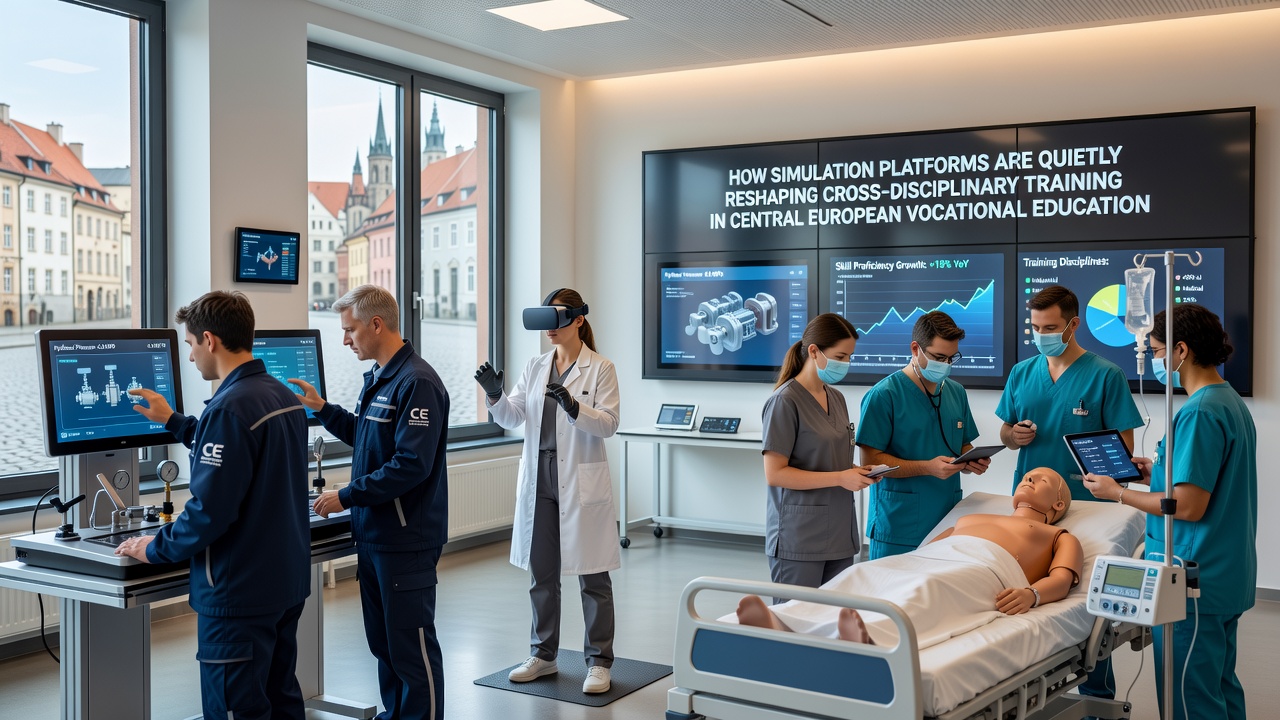
Researchers at the University of Ljubljana documented how these platforms track individual performance across disciplinary boundaries and generate reports that feed into both technical and soft-skill assessments. The same dashboard displays precision in circuit design alongside communication accuracy during team-based emergency simulations, which gives teachers a unified view of student progress.
Regional Policy Support and Funding
National ministries in the Visegrád Group countries allocated portions of European Social Fund resources specifically to simulation infrastructure upgrades, and procurement guidelines now require interoperability standards so that platforms purchased in one country remain compatible with systems used in neighboring states. A 2025 joint report prepared by the OECD and national education agencies showed that schools using shared simulation repositories cut hardware duplication costs by roughly 30 percent while increasing the variety of scenarios available to each cohort.
Training centers in Budapest and Prague have begun exchanging scenario libraries that combine welding procedures with digital quality-control checks, and the exchanges occur through secure cloud repositories managed by regional consortia rather than individual institutions.
Student Outcomes and Employer Feedback
Employers in the manufacturing and logistics sectors report that graduates who completed simulation-heavy programs require fewer onboarding hours on proprietary equipment because they already navigated comparable digital twins during their studies. A longitudinal study conducted by the Czech Technical University tracked 180 students from three vocational schools and found that those exposed to cross-disciplinary simulations achieved certification in an average of 14 percent fewer weeks than peers who followed conventional segmented training paths.
October 2026 marks the rollout of an updated European Qualifications Framework annex that explicitly recognizes simulation-based micro-credentials, and several Central European ministries have already aligned their assessment rubrics with the new descriptors.
Challenges in Scaling and Standardization
Bandwidth limitations in rural training centers still constrain real-time multi-user simulations, and instructors continue to request additional professional development on scenario authoring. Yet hardware costs have declined steadily, and open-source physics engines now handle many of the computational loads that once required dedicated servers.
Conclusion
Simulation platforms continue to embed themselves into the daily routines of Central European vocational schools by enabling students to practice integrated tasks that mirror actual workplace demands. As funding streams and policy frameworks solidify through 2026, the infrastructure supporting these tools expands while the distinction between separate disciplines grows less rigid in both teaching practice and assessment design.