Yara Otto · 16 September 2026
Shifting Physics Labs: How Remote Testing Networks Are Quietly Redefining Student Access Across Europe
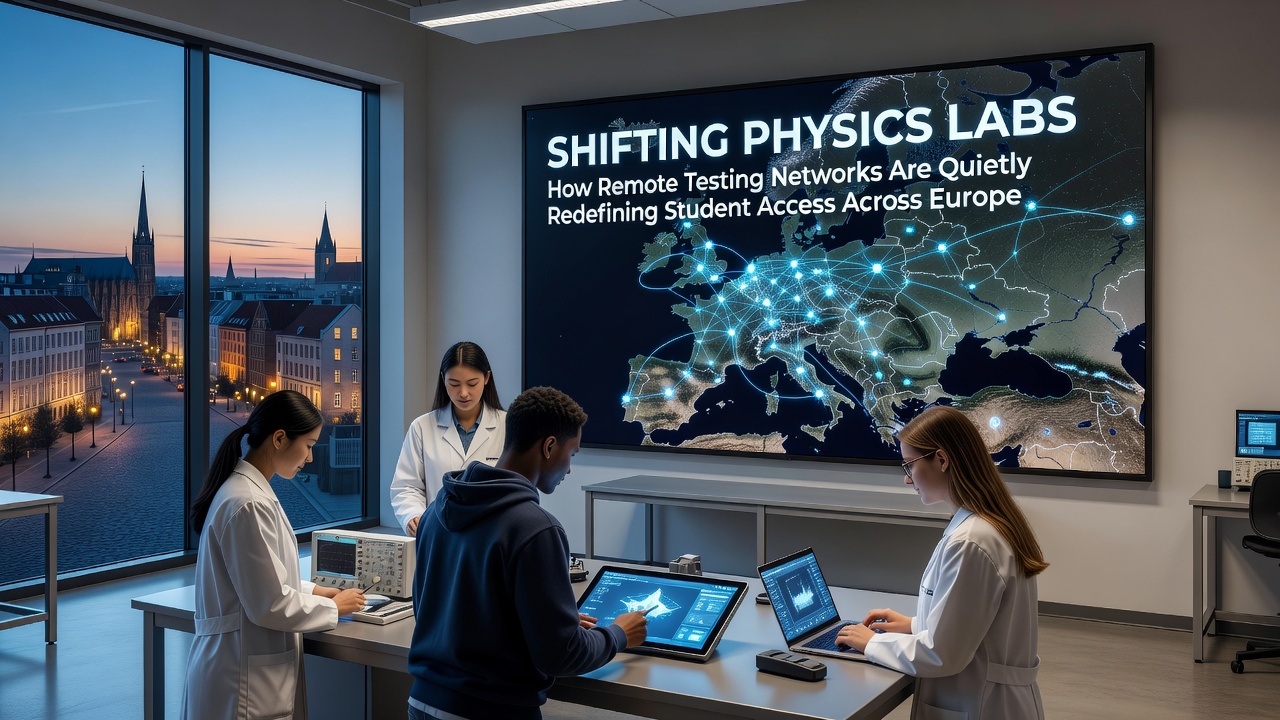
Remote testing networks have expanded across European universities since the mid-2020s, and they connect physical laboratory equipment to students in multiple countries through centralized digital platforms. These systems allow participants to control instruments such as spectrometers, oscilloscopes, and particle detectors from their own devices while data streams back in real time. Universities in Germany, France, the Netherlands, and Sweden began piloting shared access protocols in 2023, and by early 2025 several consortia had linked more than 120 lab stations into a single scheduling interface.
Expansion of Shared Infrastructure
National funding programs and cross-border agreements have driven the growth of these networks. The European Strategy for Universities, updated in 2024, allocated resources for digital laboratory integration, and participating institutions reported a 34 percent increase in remote experiment bookings between January and December 2025. Students who previously faced travel or timetable barriers now reserve time slots through a common portal that coordinates equipment availability across time zones. Researchers at Delft University of Technology documented how one such network reduced average wait times for advanced optics experiments from three weeks to four days.
Equipment manufacturers have adapted hardware interfaces to support remote operation, and open-source control software has lowered integration costs for smaller institutions. A consortium based in Barcelona coordinates calibration standards so that measurements taken on a spectrometer in Spain match those performed on an identical unit in Austria. Data logs from these sessions feed into shared repositories, and analysis tools hosted on the same platforms let students compare results without transferring large files.
Changes in Student Participation Patterns
Enrollment data collected by the European University Association shows that physics departments using remote networks recorded higher participation rates from students in rural regions and from those balancing part-time employment. In 2025, institutions in Poland and Italy each reported that 27 percent of remote lab users lived more than 150 kilometers from the host campus. Scheduling flexibility has also allowed students with mobility limitations to complete required experiments without physical presence, and several universities have adjusted assessment rubrics to include remote session logs alongside traditional lab reports.
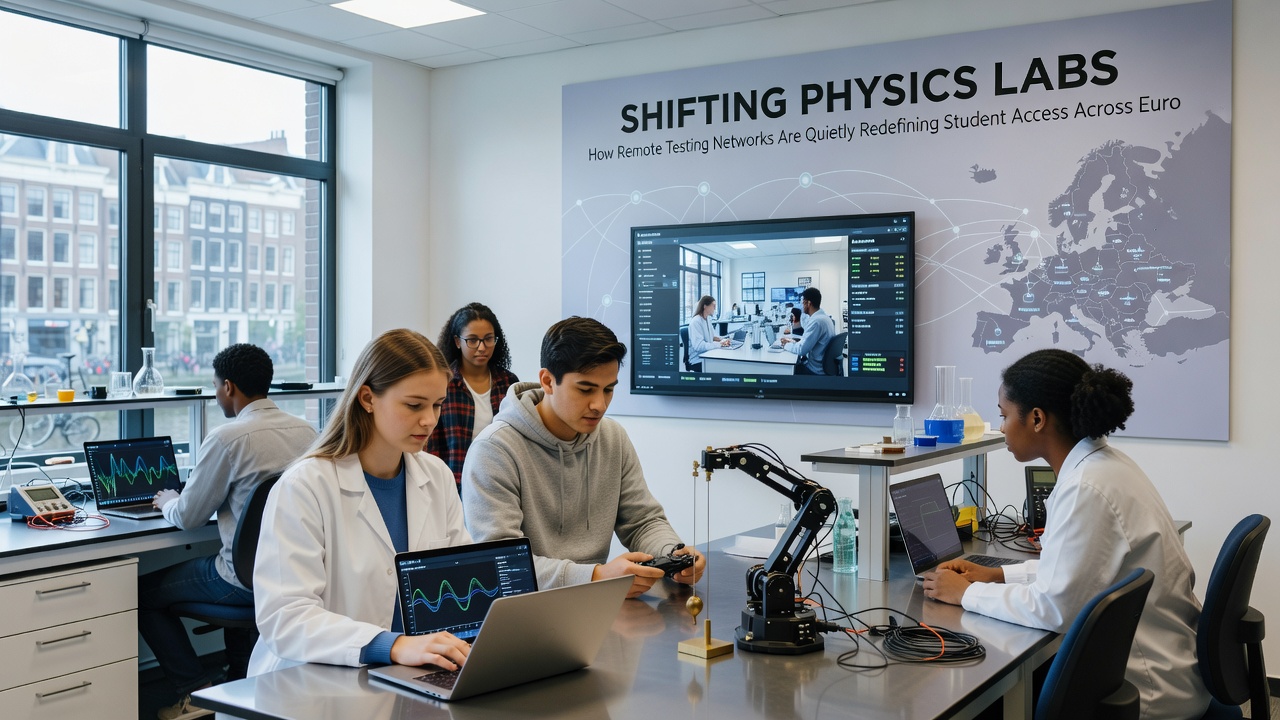
September 2026 marks the scheduled launch of an expanded scheduling layer that will incorporate real-time translation of experiment instructions into 12 European languages. Developers working with the European Commission’s education directorate have tested the system at 18 sites, and preliminary results indicate that non-native speakers completed tasks 22 percent faster when instructions appeared in their preferred language. The update also introduces automated safety interlocks that pause equipment if network latency exceeds preset thresholds, addressing concerns raised during earlier trials in 2025.
Technical and Regulatory Framework
Network operators maintain compliance with data-protection rules under the General Data Protection Regulation, and access logs are anonymized after each academic term. Cybersecurity audits conducted by independent firms in 2025 found that encryption protocols met standards set by the European Union Agency for Cybersecurity. Bandwidth requirements remain modest because most control commands and sensor readings travel as compressed packets, yet institutions in areas with slower internet connections have requested additional relay servers to maintain consistent performance.
Training programs for laboratory staff now include modules on remote supervision and virtual troubleshooting. A study published by the University of Helsinki in late 2025 tracked 340 instructors across eight countries and found that 68 percent reported increased confidence in managing remote sessions after completing a six-week certification course. The same study noted that maintenance requests for connected instruments dropped by 15 percent once staff adopted predictive diagnostics based on usage telemetry.
Conclusion
Remote testing networks continue to integrate additional instruments and institutions, and September 2026 will bring the next layer of multilingual and safety features. Figures from national education ministries show steady growth in the number of experiments conducted outside traditional lab hours, and shared infrastructure has become a standard component of physics curricula in multiple European countries. The systems rely on coordinated hardware standards, regulatory compliance, and ongoing staff development to sustain access for a broader student population.